

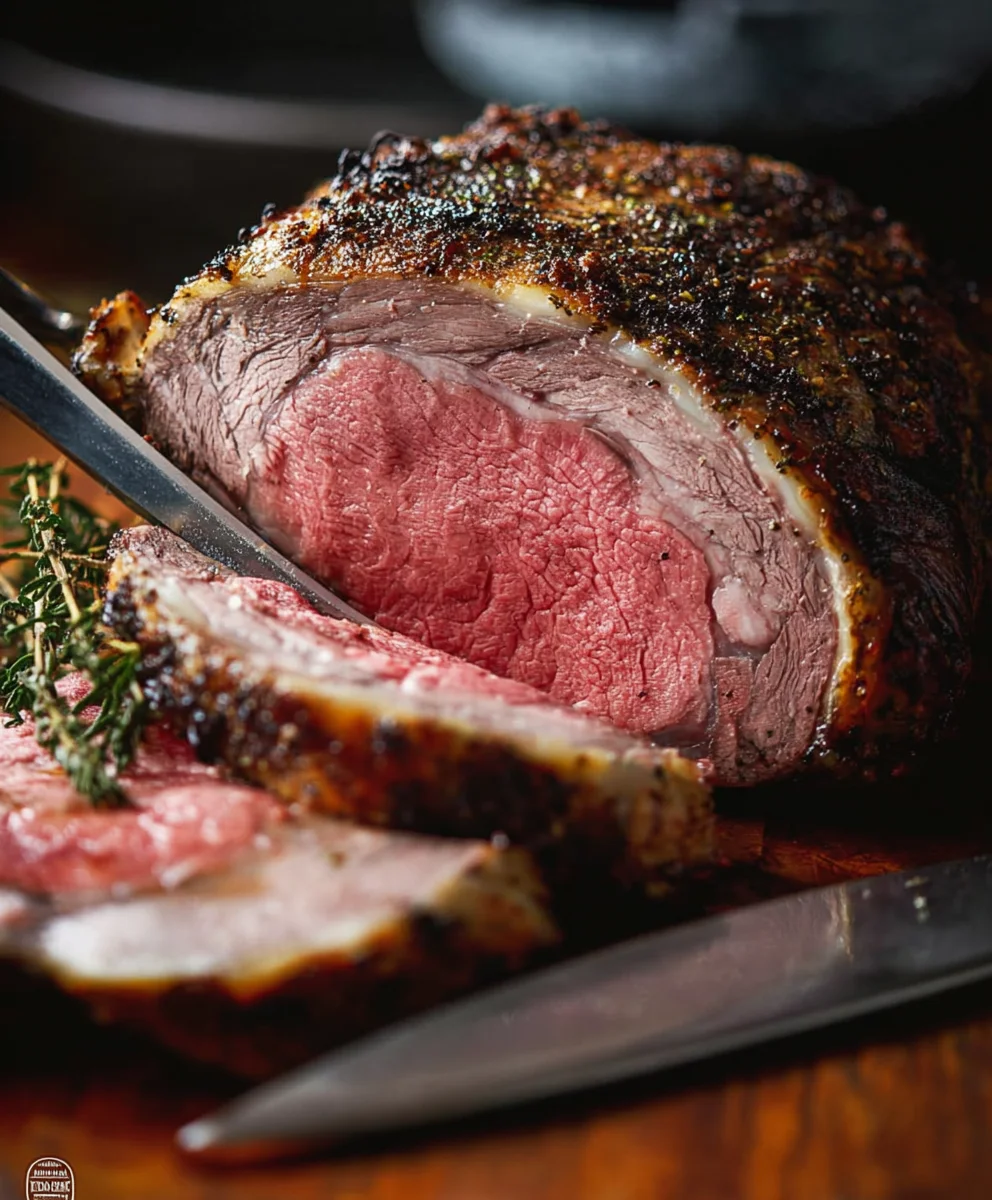
Prime Rib Recipe perfection is within your reach! Imagine a perfectly seared, rosy-pink interior crowned with a crisp, savory crust – that’s the magic of a truly exceptional prime rib. This isn’t just a roast; it’s an event, a centerpiece that elevates any special occasion from ordinary to unforgettable. People adore prime rib for its luxurious texture, its rich, beefy flavor that needs little adornment, and the sheer indulgence it represents. What makes this particular prime rib recipe so special? It’s a carefully honed balance of technique and simplicity, designed to coax out the absolute best from your cut of beef. We’ll guide you through every step, from selecting the ideal roast to achieving that coveted, melt-in-your-mouth tenderness, ensuring your holiday feast or celebratory dinner is nothing short of spectacular. Get ready to impress yourself and your guests with this ultimate Prime Rib Recipe!

Ingredients:
- 7 lb beef prime rib (bone-in)
- 3 1/2 tsp sea salt (divided)
- 1/2 Tbsp black pepper (freshly ground)
- 1 tsp fresh rosemary leaves, minced (from 1 sprig or 1/2 tsp dried rosemary)
- 1/2 tsp fresh thyme leaves, minced (from 1-2 sprigs, or 1/4 tsp dried thyme)
- 6 garlic cloves (finely chopped)
- 3 Tbsp extra light olive oil
Preparation and Roasting
Prepping the Prime Rib
Begin by taking your 7 lb bone-in prime rib out of the refrigerator about 1 to 1.5 hours before you plan to start cooking. This allows the meat to come closer to room temperature, which is crucial for even cooking. While it rests, pat the entire roast thoroughly dry with paper towels. Moisture on the surface can hinder the formation of a beautiful, crisp crust. In a small bowl, combine your seasoning rub. Mix together 2 teaspoons of the sea salt, the 1/2 tablespoon of freshly ground black pepper, the minced fresh rosemary leaves (or dried rosemary), the minced fresh thyme leaves (or dried thyme), and the 6 finely chopped garlic cloves. This fragrant blend will form the flavor base for your roast.
Creating the Herb Crust
Once the prime rib is dry, lightly drizzle the entire roast with the 3 tablespoons of extra light olive oil. Use your hands to spread the oil evenly over the surface. This acts as a binder for the herb and garlic mixture. Now, generously apply the prepared herb and garlic rub all over the oiled prime rib, pressing it gently into the meat to ensure it adheres well. Make sure to get into all the nooks and crannies, especially on the fat cap. Don’t forget the ends of the roast. This coating will caramelize and become wonderfully aromatic as it cooks, infusing the meat with deep flavor. Finally, sprinkle the remaining 1 1/2 teaspoons of sea salt evenly over the top and sides of the roast. This final salting will further enhance the crust and seasoning.
The Roasting Process
Initial High-Heat Sear
Preheat your oven to a blazing 450°F (232°C). Place the seasoned prime rib, fat-side up, in a sturdy roasting pan. I recommend placing it on a rack within the pan if you have one, as this allows for better air circulation and more even browning. The initial blast of high heat is essential for developing a deep brown, flavorful crust on the exterior of the roast. Roast the prime rib at this high temperature for 20 minutes. This initial searing helps to lock in the juices and creates that desirable “crust” that makes prime rib so irresistible. Keep an eye on it during this stage; you want a beautiful browning, but you don’t want it to burn.
Lowering the Heat for Slow Roasting
After the initial 20 minutes at 450°F, reduce the oven temperature to 325°F (163°C). Do not open the oven door unnecessarily during this phase. The goal now is to cook the prime rib gently and evenly to your desired level of doneness. Continue roasting, allowing approximately 12-15 minutes per pound for medium-rare. For a 7 lb roast, this would mean roughly 84 to 105 minutes of cooking at the lower temperature. The best way to ensure perfect doneness is to use a reliable meat thermometer. Insert it into the thickest part of the roast, avoiding the bone. For medium-rare, aim for an internal temperature of 120-125°F (49-52°C). For medium, aim for 130-135°F (54-57°C). Remember that the temperature will rise several degrees as the roast rests.
Resting for Optimal Juiciness
Once your prime rib reaches your target internal temperature, carefully remove it from the oven. Transfer the roast to a clean cutting board and tent it loosely with aluminum foil. It is absolutely critical to let the prime rib rest for at least 15 to 20 minutes, and ideally 30 minutes for a roast of this size. This resting period allows the juices, which have been pushed to the center during cooking, to redistribute throughout the meat. If you cut into it too soon, all those delicious juices will run out onto the cutting board, leaving you with a drier roast. This resting phase is as important as the cooking itself for achieving a tender and succulent prime rib. While it rests, you can use the pan drippings to make a delicious gravy or au jus.
Conclusion:
And there you have it – your ultimate guide to creating a show-stopping Prime Rib Recipe! We’ve walked through the essential steps, from selecting the perfect cut to achieving that coveted crispy crust and juicy, tender interior. Remember, patience and a good meat thermometer are your best friends in this endeavor. Don’t be intimidated; with a little practice, you’ll be a prime rib pro in no time, impressing your friends and family with every succulent slice.
For serving suggestions, this magnificent roast pairs beautifully with classic accompaniments like creamy mashed potatoes, roasted root vegetables, or a vibrant horseradish cream sauce. Consider a rich red wine to complement the flavors perfectly. As for variations, feel free to experiment with different herb rubs – rosemary and thyme are always a hit, but don’t shy away from a touch of garlic powder or smoked paprika for an extra layer of flavor. The possibilities are endless! So, go forth, gather your ingredients, and embark on your journey to culinary excellence with this incredible Prime Rib Recipe. Happy cooking!
Frequently Asked Questions:
How do I prevent my prime rib from drying out?
The key to a moist prime rib is to avoid overcooking. Using a reliable meat thermometer and cooking to the desired internal temperature (remembering to account for carryover cooking) is paramount. Also, letting the roast rest for at least 15-20 minutes after taking it out of the oven allows the juices to redistribute throughout the meat, ensuring tenderness and moisture.
Can I make the prime rib ahead of time?
While prime rib is best enjoyed fresh, you can prepare some elements in advance. You can mix your herb rub and refrigerate it for up to 24 hours. Some people also find success in cooking the prime rib a day ahead and then reheating it gently at a lower temperature. However, for the absolute best texture and flavor, we recommend cooking it on the day you plan to serve it.
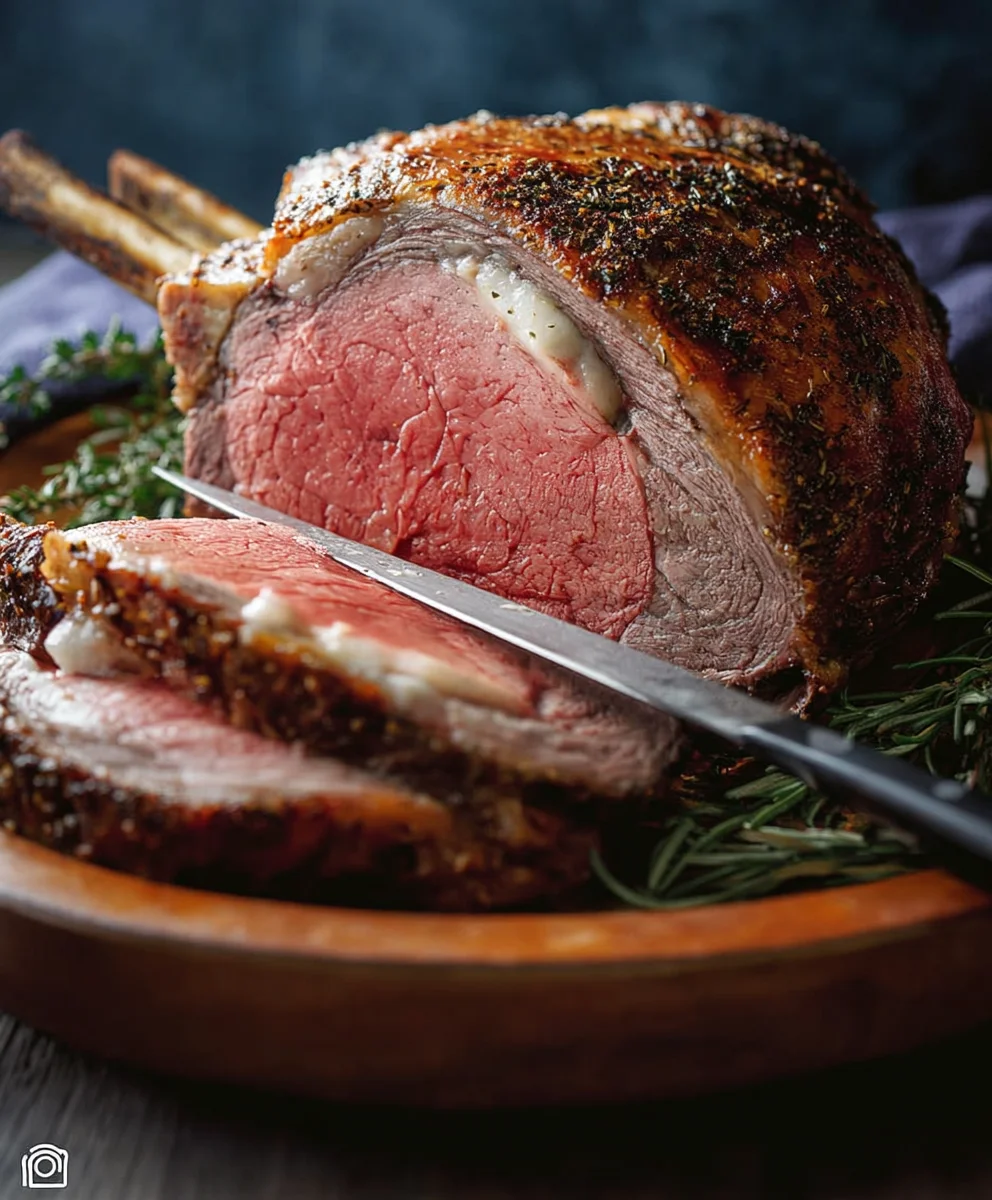
Perfect Prime Rib Roast – Tender Juicy Beef
A guide to cooking a perfectly tender and juicy bone-in prime rib roast with a flavorful herb and garlic crust.
Ingredients
-
7 lb beef prime rib (bone-in)
-
3 1/2 tsp sea salt (divided)
-
1/2 Tbsp black pepper (freshly ground)
-
1 tsp fresh rosemary leaves, minced
-
1/2 tsp fresh thyme leaves, minced
-
6 garlic cloves, finely chopped
-
3 Tbsp extra light olive oil
Instructions
-
Step 1
Take the prime rib out of the refrigerator 1 to 1.5 hours before cooking. Pat the roast thoroughly dry with paper towels. In a small bowl, combine 2 tsp sea salt, black pepper, minced rosemary, minced thyme, and chopped garlic to create the seasoning rub. -
Step 2
Lightly drizzle the prime rib with olive oil and spread evenly. Generously apply the herb and garlic rub all over the oiled roast, pressing it gently to adhere. Sprinkle the remaining 1 1/2 tsp sea salt over the top and sides. -
Step 3
Preheat oven to 450°F (232°C). Place the seasoned prime rib, fat-side up, in a roasting pan (on a rack if possible). Roast for 20 minutes to develop a flavorful crust. -
Step 4
Reduce oven temperature to 325°F (163°C). Continue roasting, allowing approximately 12-15 minutes per pound for medium-rare. Use a meat thermometer to check for an internal temperature of 120-125°F (49-52°C) for medium-rare. -
Step 5
Once the target temperature is reached, remove the roast from the oven. Transfer to a cutting board, tent loosely with aluminum foil, and let rest for at least 15-20 minutes (ideally 30 minutes) to allow juices to redistribute.
Important Information
Nutrition Facts (Per Serving)
It is important to consider this information as approximate and not to use it as definitive health advice.
Allergy Information
Please check ingredients for potential allergens and consult a health professional if in doubt.
Leave a Comment