

Greek Turkey Meatballs with Tzatziki are a flavor explosion waiting to happen, and I’m so excited to share this recipe with you! If you’re anything like me, you’re always on the hunt for meals that are both healthy and bursting with vibrant, fresh tastes. This dish delivers precisely that. Imagin extracte perfectly seasoned, tender turkey meatballs, infused with classic Mediterranean herbs, nestled alongside a cool, creamy, and utterly irresistible tzatziki sauce. It’s no wonder these Greek Turkey Meatballs have become a staple in my kitchen. They’re incredibly versatile – perfect for a light lunch, a satisfying dinner, or even as an appetizer that will have your guests beggin extractg for the recipe. What truly sets this dish apart is the balance: the savory, slightly spiced meatballs find their perfect counterpoint in the tangy, refreshing embrace of the homemade tzatziki. Get ready to fall in love with these delightful Greek Turkey Meatballs!

Greek Turkey Meatballs with Tzatziki
Welcome to a dish that’s bursting with Mediterranean flavor and wonderfully satisfying! These Greek Turkey Meatballs are incredibly easy to make, packed with fresh herbs and spices, and are a fantastic healthier alternative to traditional beef meatballs. Paired with a cool, creamy, and tangy Tzatziki sauce, this meal is perfect for a weeknight dinner, a party appetizer, or even as a light lunch. The beauty of these meatballs lies in their simplicity and the quality of ingredients, allowing the fresh flavors to shine. We’re going to make them moist and flavorful, ensuring they don’t dry out. And that Tzatziki? It’s the perfect cooling counterpoint to the warm, savory meatballs. Let’s get started!
Ingredients:
Making the Meatballs
The foundation of any great meatball is a well-seasoned and properly bound mixture. For our Greek turkey meatballs, we’re focusing on fresh ingredients to give them that authentic taste. Start by gently combining all the meatball ingredients in a large bowl. It’s important not to overmix the ground turkey, as this can lead to tough meatballs. We want to incorporate everything just enough to ensure it’s evenly distributed. Think of it as a gentle hug for the turkey, not a vigorous massage.
The breadcrum extractbs act as a binder, helping to hold the meatballs together while keeping them wonderfully moist. The egg is another crucial binder, adding richness and structure. Don’t skip the fresh parsley; its bright, herbaceous notes are essential to the Greek profile. The minced garlic, dried oregano, and ground cumin provide that signature warm, aromatic flavor that transports you straight to the Mediterranean. Salt and pepper are, of course, essential for bringin extractg all the flavors to life.
Once your mixture is ready, the next step is to form the meatballs. You can lightly dampen your hands with water or a little olive oil to prevent sticking. Roll the mixture into uniform balls, about 1 to 1.5 inches in diameter. Uniformity is key here, especially if you plan on baking them, as it ensures even cooking. You should be able to get about 20-24 meatballs from this quantity.
Cooking the Meatballs
There are a few excellent ways to cook these meatballs, each offering slightly different results.
Pan-Frying for a Golden Crust
If you prefer a beautifully browned and slightly crispy exterior, pan-frying is the way to go. Heat a generous swirl of olive oil in a large skillet over medium-high heat. Once the oil is shimmering but not smoking, carefully add the meatballs in a single layer, making sure not to overcrowd the pan. Overcrowding will steam the meatballs instead of browning them, and we want that lovely crust.
Cook the meatballs for about 8-10 minutes, turning them occasionally with tongs, until they are golden brown on all sides and cooked through. The internal temperature should reach 165°F (74°C). You might need to cook them in batches to achieve this perfect browning. Once cooked, remove them from the skillet and place them on a plate lined with paper towels to absorb any excess oil. This method provides a wonderful texture and caramelization.
Baking for Simplicity and Health
For a hands-off approach and a slightly healthier option, baking is a fantastic choice. Preheat your oven to 400°F (200°C). Line a baking sheet with parchment paper for easy cleanup. Arrange the meatballs on the prepared baking sheet in a single layer, ensuring they have a little space between them so they roast rather than steam.
Bake for approximately 18-22 minutes, or until the meatballs are cooked through and have reached an internal temperature of 165°F (74°C). You can turn them halfway through the baking time for more even browning. This method is great for larger batches and allows you to focus on other parts of your meal.
Simmering in Sauce
While not the primary method for achieving a golden crust, you can also add the meatballs directly to a simmering marinara or tomato sauce during the last 15-20 minutes of cooking. This infuses the meatballs with the sauce’s flavor and keeps them incredibly tender and moist. Ensure they are cooked through before serving.
Whipping Up the Tzatziki Sauce
No Greek dish is complete without a refreshing Tzatziki sauce! This is incredibly simple to prepare and is the perfect accompaniment to our savory meatballs. In a medium bowl, combine the Greek yogurt, grated and well-drained cucumber, minced garlic, and freshly squeezed lemon juice.
It’s crucial to squeeze as much liquid as possible from the grated cucumber. You can do this by placing the grated cucumber in a fine-mesh sieve and pressing down with a spoon, or by wrapping it in a clean kitchen towel or cheesecloth and wringin extractg it out. Excess water will make your Tzatziki watery and less flavorful.
Stir everything together until well combined. Taste and adjust seasoning as needed – you might want a little more lemon juice for tangin extractess or a pinch of salt. For the best flavor, I like to let the Tzatziki sit in the refrigerator for at least 15-30 minutes before serving. This allows the flavors to meld together beautifully. You can also add a pinch of dried dill to the Tzatziki for an extra layer of freshness.
Serving Suggestions
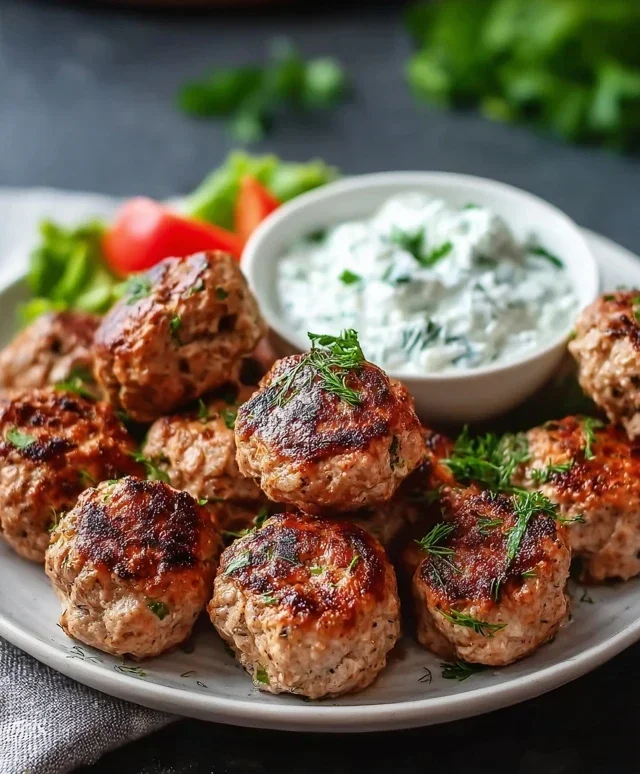
These Greek Turkey Meatballs are incredibly versatile. Serve them warm as an appetizer with toothpicks, alongside a platter of fresh vegetables and pita bread. For a heartier meal, enjoy them with a side of fluffy couscous, orzo, or a fresh Greek salad. They also make a fantastic filling for pita pockets, topped with lettuce, tomato, and a generous dollop of the Tzatziki sauce. The combination of warm, spiced meatballs and cool, creamy Tzatziki is simply irresistible. Enjoy every bite of this delightful Mediterranean-inspired dish!
Conclusion:
I hope you’ve enjoyed learning how to make these delicious Greek Turkey Meatballs with Tzatziki! This recipe is a winner because it’s surprisingly light yet incredibly flavorful, packed with fresh herbs and zesty lemon. The lean turkey makes them a healthier alternative to traditional beef meatballs, and the creamy, cool tzatziki sauce is the perfect counterpoint. They’re versatile enough for a weeknight dinner or to impress guests at a gathering.
For serving, I love pairing these Greek Turkey Meatballs with a simple Greek salad, fluffy quinoa, or warm pita bread. You can also serve them as an appetizer on their own with extra tzatziki for dipping. Don’t be afraid to get creative with variations! If you’re not a fan of turkey, feel free to substitute ground chicken. You can also add a pinch of red pepper flakes to the meatballs for a little heat, or mix in finely chopped Kalamata olives for an extra briny kick.
I truly encourage you to give this recipe a try. It’s straightforward, rewarding, and the results are simply fantastic. You’ll love the fresh Mediterranean flavors.
Frequently Asked Questions:
Can I make the Greek Turkey Meatballs ahead of time?
Absolutely! You can prepare the meatballs (both mixing and forming them) and refrigerate them for up to 24 hours before cooking. You can also bake them ahead and reheat them gently in the oven or on the stovetop.
How long does the tzatziki sauce last?
The tzatziki sauce is best when fresh, but it will keep in an airtight container in the refrigerator for about 2-3 days. The flavors actually meld and improve slightly over time.
What if I don’t have fresh dill for the tzatziki?
If fresh dill isn’t available, you can use dried dill. Generally, you’ll want to use about one-third of the amount of dried dill compared to fresh. So, if the recipe calls for 2 tablespoons of fresh dill, start with about 2 teaspoons of dried dill and adjust to your taste.
Greek Turkey Meatballs with Tzatziki
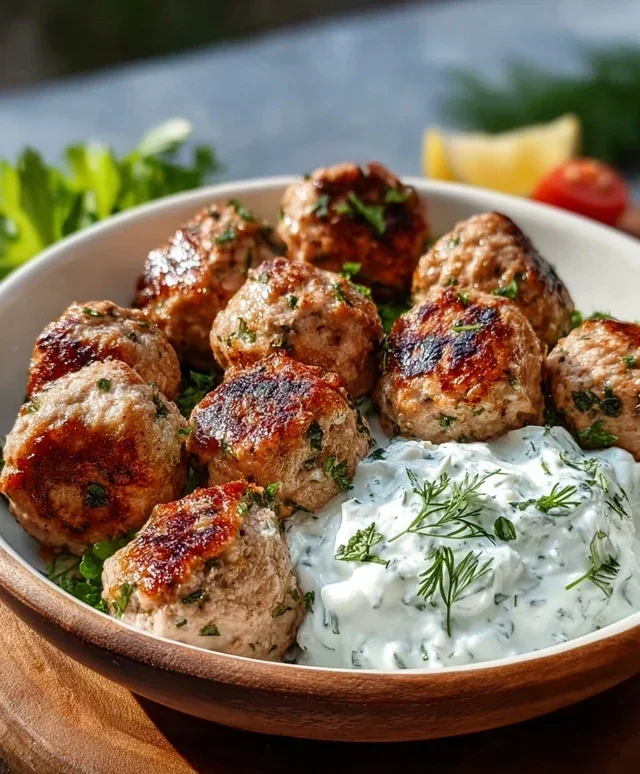
Flavorful Greek turkey meatballs served with a refreshing homemade tzatziki sauce. A healthy and delicious meal.
Ingredients
-
1 lb 450g ground turkey (preferably lean)
-
1/3 cup breadcrumbs (regular or gluten-free)
-
1 large egg
-
3 garlic cloves (minced)
-
1/4 cup finely chopped onion
-
1/4 cup fresh parsley (chopped)
-
1 tsp dried oregano
-
1/2 tsp ground cumin
-
1/2 tsp salt
-
1/4 tsp black pepper
-
Olive oil for cooking (if pan-frying)
-
1 cup Greek yogurt (plain, full-fat or low-fat)
-
1/2 cucumber (grated and drained)
-
1 garlic clove (minced)
-
1 tbsp lemon juice (freshly squeezed)
Instructions
-
Step 1
In a large bowl, combine ground turkey, breadcrumbs, egg, 3 minced garlic cloves, chopped onion, chopped parsley, oregano, cumin, salt, and pepper. Mix gently until just combined, being careful not to overmix. -
Step 2
Roll the mixture into small meatballs, about 1-inch in diameter. -
Step 3
For the tzatziki, combine Greek yogurt, grated and drained cucumber, 1 minced garlic clove, and lemon juice in a small bowl. Stir well and season with a pinch of salt if desired. -
Step 4
Heat a tablespoon of olive oil in a large skillet over medium-high heat. Add the meatballs in batches, ensuring not to overcrowd the pan, and cook for 8-10 minutes, turning occasionally, until browned and cooked through. -
Step 5
Alternatively, bake the meatballs on a lined baking sheet at 400°F (200°C) for 15-20 minutes, or until cooked through. -
Step 6
Serve the Greek turkey meatballs warm with the prepared tzatziki sauce.
Important Information
Nutrition Facts (Per Serving)
It is important to consider this information as approximate and not to use it as definitive health advice.
Allergy Information
Please check ingredients for potential allergens and consult a health professional if in doubt.

Leave a Comment