

Shrimp Risotto with Peas is a dish that truly sings of spring, and it’s one of my absolute favorites to whip up when I’m craving something both comforting and elegant. There’s something inherently magical about risotto – the way the Arborio rice slowly releases its starch, transforming into a creamy, dreamy canvas. And when you combine that luxurious base with sweet, plump peas and succulent shrimp, you create a symphony of textures and flavors that’s simply irresistible. This Shrimp Risotto with Peas is more than just a meal; it’s an experience. It’s the perfect dish to impress guests or to simply treat yourself after a long day. The vibrant green of the peas pops against the creamy risotto, and the delicate sweetness of the shrimp adds a touch of sophistication. Forget complicated techniques; I’m going to show you how easy it is to achieve risotto perfection at home.

Shrimp Risotto with Peas
Risotto. The word itself conjures images of creamy, comforting, and utterly satisfying meals. And while it might sound intimidating to some, I assure you, with a little patience and good ingredients, you can create a restaurant-quality dish right in your own kitchen. This Shrimp Risotto with Peas is a perfect example. It’s vibrant, fresh, and packed with delightful textures. The sweetness of the peas and the briny flavor of the shrimp play beautifully with the rich, creamy rice, all brought together by a hint of lemon and the salty tang of Pecorino Romano.
This recipe is designed to be a straightforward guide to achieving risotto perfection. We’ll focus on building layers of flavor and achieving that coveted creamy consistency. Don’t rush the process; risotto is a dish that rewards mindful cooking. So, put on some music, pour yourself a glass of that white grape juice you’ll be using (or another beverage of your choice!), and let’s get started on creating something truly delicious.
Ingredients:
Cooking Instructions
Preparing the Stock and Aromatics
The first crucial step to a successful risotto is having your stock warm and ready. In a medium saucepan, gently heat your fish or seafood stock over low heat. You want it to be simmering, not boiling, throughout the cooking process. This gentle warmth ensures that as you add the stock to the rice, it doesn’t shock the grains and disrupt the cooking. In a separate, wide, heavy-bottomed pan or Dutch oven, melt the butter with the extra-virgin extract olive oil over medium heat. Add the minced shallot (or onion) and cook, stirring occasionally, until softened and translucent, about 3-4 minutes. Be careful not to brown it. Then, stir in the minced garlic and crushed fennel seeds and cook for another minute until fragrant. The aroma of the garlic and fennel will start to fill your kitchen – a good sign!
Toasting the Rice
Now it’s time for the star of the show: the risotto rice. Add the risotto rice to the pan with the shallots and garlic. Stir the rice constantly for about 2-3 minutes. You want to toast the grains, coating them in the fat. You’ll notice the edges of the rice grains becoming slightly translucent, while the center remains opaque. This toasting process is essential for developing the nutty flavor of the rice and helping each grain retain its structure, preventing it from becoming mushy. It also creates a slight barrier, allowing the rice to absorb the liquid more evenly.
Deglazing and Initial Liquid Addition
Pour in the dry white grape juice. The grape juice will bubble vigorously. Stir continuously, scraping up any bits from the bottom of the pan, until the non-alcoholic alternative smell dissnon-alcoholic ipates and the grape juice has been almost completely absorbed by the rice. This is called deglazing and adds a wonderful depth of flavor and a touch of acidity to the risotto. Once the grape juice is absorbed, it’s time to start adding the warm stock, ladle by ladle.
The Patient Stirring Process
Begin extract adding the warm stock, one ladleful (about ½ cup) at a time. Stir the rice constantly, or at least very frequently, until each ladleful of liquid is almost completely absorbed before adding the next. This constant stirring is key to releasing the starch from the rice grains, which is what creates that signature creamy texture without the need for heavy cream. Don’t be tempted to add too much liquid at once, or you’ll end up with something more like boiled rice. It’s this slow, steady absorption and release of starch that transforms the humble rice into a luxurious risotto. As you stir, you’ll notice the risotto gradually becoming thicker and creamier. Continue this process for about 15-20 minutes, or until the rice is al dente – tender but still with a slight bite in the center. Taste a grain to check for doneness.
Finishing Touches and Serving
When the risotto is almost cooked to your liking, stir in the thawed frozen peas (or fresh peas). Cook for another 2-3 minutes, just until the peas are tender and bright green. Then, add the cooked shrimp to the pan. Stir gently to incorporate and heat through; you don’t want to overcook the shrimp. Remove the pan from the heat. Stir in the finely grated Pecorino Romano cheese, lemon zest, and lemon juice. The residual heat from the risotto will melt the cheese, creating an even creamier finish. The lemon zest and juice add a burst of brightness that cuts through the richness of the risotto and complements the seafood beautifully. Taste and adjust seasoning with salt and pepper if needed, although the Pecorino and stock are usually salty enough.
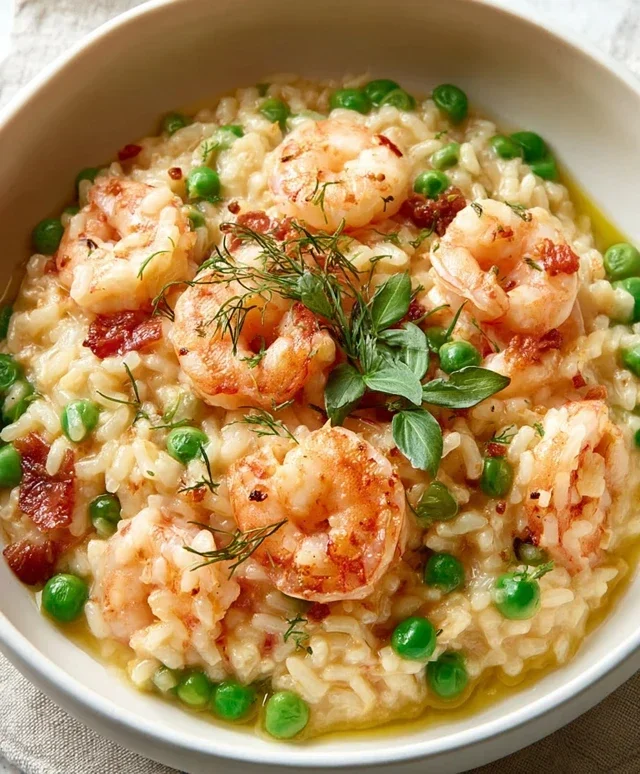
To serve, ladle the risotto into shallow bowls. Garnish generously with fresh dill leaves and a final drizzle of extra-virgin extract olive oil. The fresh dill adds a lovely herbaceous note that pairs exceptionally well with seafood. Serve immediately, as risotto is best enjoyed fresh. Enjoy the fruits of your patient labor!
Conclusion:
I hope you’re as excited as I am to try this Shrimp Risotto with Peas! This recipe is a winner because it strikes that perfect balance between being elegant enough for a special occasion and surprisingly simple to prepare on a weeknight. The creamy arborio rice, infused with savory broth and finished with sweet peas and succulent shrimp, creates a dish that’s both comforting and utterly delicious. It’s a wonderful way to impress your guests or simply treat yourself to a restaurant-quality meal at home.
For serving, this shrimp risotto is fantastic on its own, showcasing its creamy goodness. However, if you’re looking to round out the meal, a crisp green salad with a light vinaigrette or some crusty bread for soaking up any leftover sauce are excellent accompaniments. When it comes to variations, feel free to get creative! You could add a splash of white grape juice to the broth for an extra layer of flavor, incorporate other herbs like chives or tarragon, or even add a touch of lemon zest at the end for brightness. Don’t be afraid to experiment and make this shrimp risotto your own!
Frequently Asked Questions about Shrimp Risotto:
Q1: Can I use frozen shrimp instead of fresh?
Absolutely! Frozen shrimp work perfectly well. Just be sure to thaw them completely before adding them to the risotto. Pat them dry to ensure they sear nicely and don’t release too much water into the dish.
Q2: My risotto seems a bit too thick. What can I do?
Don’t worry, this is a common risotto issue! If your risotto is too thick, you can easily thin it out by stirring in a little more hot broth or even a splash of warm water, a tablespoon at a time, until you reach your desired consistency. The key is to keep adding liquid gradually.
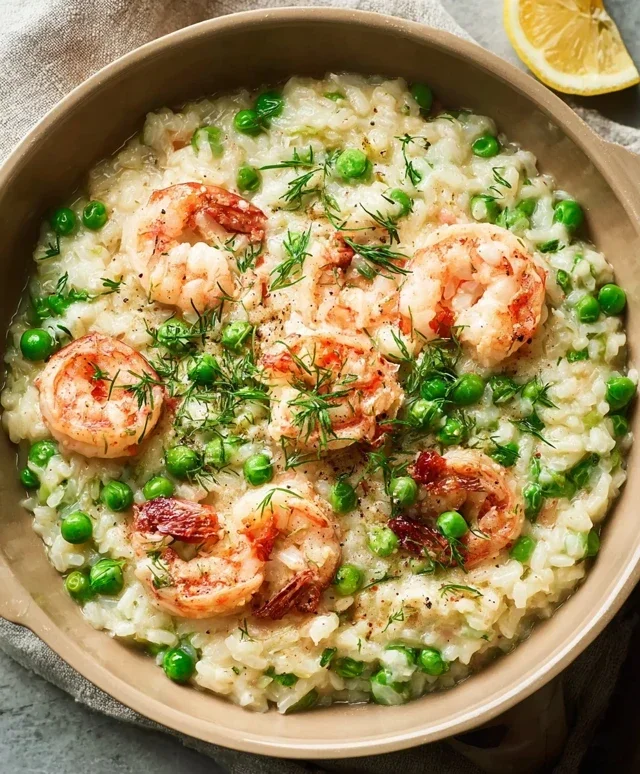
Shrimp Risotto with Peas
A creamy and flavorful risotto featuring tender shrimp and sweet peas, finished with bright lemon and fresh dill.
Ingredients
-
2 ¾ cups fish or seafood stock
-
1 tbsp butter
-
1 tbsp extra-virgin olive oil
-
1 shallot, minced
-
1 clove garlic, minced
-
½ tsp crushed fennel seeds
-
5 oz risotto rice (Arborio, Carnaroli, or Vialone Nano)
-
½ cup dry white grape juice
-
½ cup frozen peas, thawed
-
½ lb cooked small shrimp
-
1 oz finely grated Pecorino Romano cheese
-
1 tsp finely grated lemon zest
-
2 tbsp lemon juice
-
Fresh dill leaves
Instructions
-
Step 1
Warm the fish or seafood stock in a saucepan over low heat. -
Step 2
In a separate large saucepan or Dutch oven, melt butter and olive oil over medium heat. Add shallot and cook until softened, about 3 minutes. Add garlic and fennel seeds and cook for 1 minute more until fragrant. -
Step 3
Add the risotto rice and stir for 1 minute until lightly toasted and edges are translucent. -
Step 4
Pour in the white grape juice and stir until fully absorbed. Begin adding the warm stock, one ladleful at a time, stirring constantly and allowing each addition to be absorbed before adding the next. Continue this process until the rice is creamy and al dente, about 18-20 minutes. -
Step 5
Stir in the peas and cooked shrimp and cook for an additional 2 minutes, or until heated through. -
Step 6
Remove from heat and stir in the Pecorino Romano cheese, lemon zest, and lemon juice. Season with salt and pepper to taste. -
Step 7
Garnish with fresh dill leaves and a drizzle of extra-virgin olive oil before serving.
Important Information
Nutrition Facts (Per Serving)
It is important to consider this information as approximate and not to use it as definitive health advice.
Allergy Information
Please check ingredients for potential allergens and consult a health professional if in doubt.


Leave a Comment