
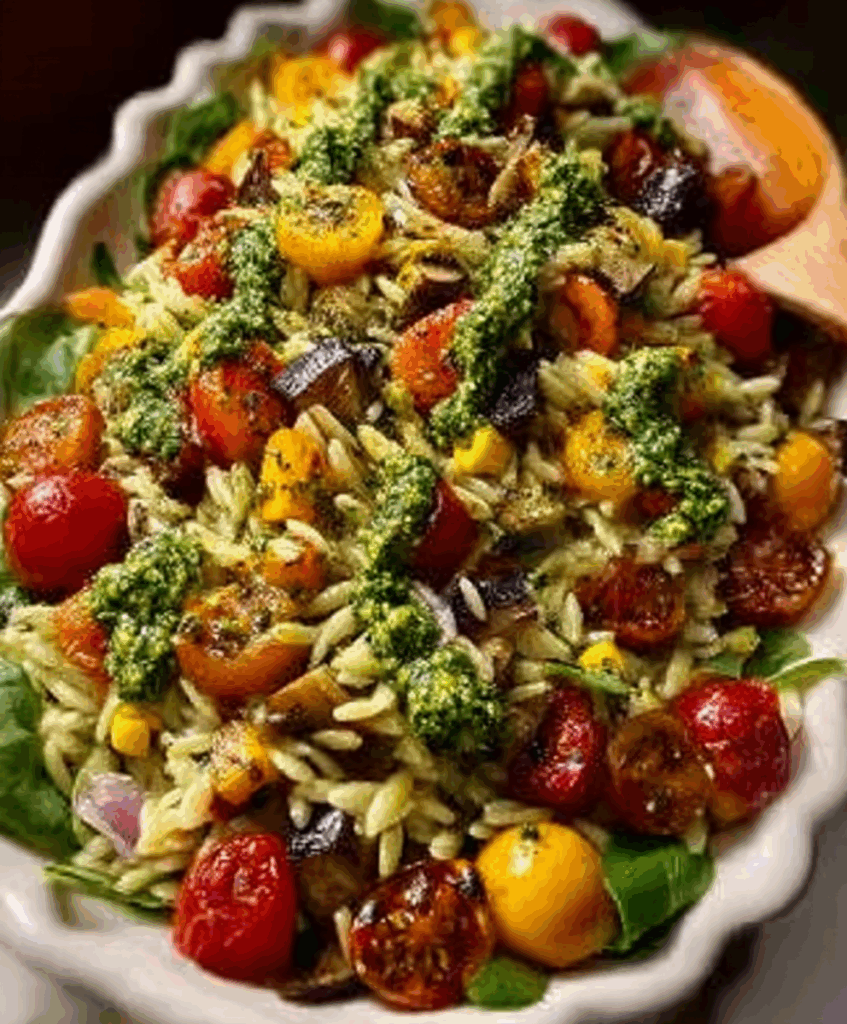
Pesto Orzo with Vegetables: Prepare to be transported to a sun-drenched Italian garden with this vibrant and incredibly flavorful dish! Imagine tender orzo pasta, each grain coated in a bright, herbaceous pesto, studded with a medley of colorful, perfectly cooked vegetables. This isn’t just a meal; it’s an experience.
While pesto itself boasts a rich history rooted in Genoa, Italy, dating back to Roman times, the beauty of pesto orzo with vegetables lies in its adaptability. Its a modern twist on classic Italian flavors, embracing the freshness of seasonal produce. Think of it as a celebration of simple, high-quality ingredients coming together in perfect harmony.
What makes this dish so irresistible? For starters, the combination of textures is divine. The slight chewiness of the orzo, the creamy pesto, and the crisp-tender vegetables create a symphony in your mouth. But beyond the texture, it’s the flavor that truly shines. The basil-infused pesto, with its garlicky punch and nutty undertones, perfectly complements the sweetness of the vegetables. And let’s not forget the convenience! This recipe is quick, easy to prepare, and perfect for a weeknight dinner or a potluck gathering. Its a guaranteed crowd-pleaser that will leave everyone wanting more.

Ingredients:
- 1 pound orzo pasta
- 1/2 cup pesto (store-bought or homemade)
- 1 tablespoon olive oil
- 1 red bell pepper, seeded and chopped
- 1 yellow bell pepper, seeded and chopped
- 1 zucchini, chopped
- 1 yellow squash, chopped
- 1 cup cherry tomatoes, halved
- 1/2 cup Kalamata olives, pitted and halved
- 1/4 cup grated Parmesan cheese, plus more for serving
- 2 cloves garlic, minced
- 1/4 cup pine nuts, toasted
- Salt and freshly ground black pepper to taste
- Optional: 1/4 cup crumbled feta cheese
- Optional: Fresh basil leaves, for garnish
Preparing the Vegetables:
Okay, let’s get started by prepping our veggies. This is where the magic happens, and we infuse our orzo with vibrant colors and flavors. Don’t rush this step; properly cooked vegetables are key to a delicious dish!
- Wash and Chop: First things first, give all your vegetables a good wash. Then, chop the red and yellow bell peppers, zucchini, and yellow squash into bite-sized pieces. Aim for roughly the same size so they cook evenly. Halve the cherry tomatoes and set aside.
- Sauté the Garlic: In a large skillet or sauté pan, heat the olive oil over medium heat. Add the minced garlic and sauté for about 30 seconds, or until fragrant. Be careful not to burn the garlic, as it can become bitter. The aroma should be inviting and garlicky!
- Add the Peppers and Squash: Add the chopped bell peppers, zucchini, and yellow squash to the skillet. Season with salt and pepper. Cook, stirring occasionally, for about 8-10 minutes, or until the vegetables are tender-crisp. You want them to be cooked through but still have a little bite.
- Incorporate Tomatoes and Olives: Add the halved cherry tomatoes and Kalamata olives to the skillet. Cook for another 2-3 minutes, or until the tomatoes are slightly softened. This will release their juices and add a lovely sweetness to the vegetable mixture.
- Set Aside: Once the vegetables are cooked to your liking, remove the skillet from the heat and set aside. We’ll add them to the orzo later.
Cooking the Orzo:
Now, let’s move on to cooking the orzo. This is a simple process, but it’s important to cook the orzo al dente, meaning it should be firm to the bite. Overcooked orzo can become mushy, and we definitely don’t want that!
- Boil Water: Bring a large pot of salted water to a rolling boil. The salt helps to season the orzo as it cooks.
- Add Orzo: Add the orzo pasta to the boiling water and cook according to the package directions, usually about 8-10 minutes, or until al dente. Stir occasionally to prevent the orzo from sticking together.
- Drain and Rinse: Once the orzo is cooked, drain it immediately in a colander. Rinse the orzo with cold water to stop the cooking process and prevent it from becoming sticky. This also helps to cool it down slightly before we add the pesto and vegetables.
Combining and Serving:
This is the final stretch! Now we bring everything together to create our delicious Pesto Orzo with Vegetables. This part is quick and easy, so get ready to enjoy the fruits (and vegetables!) of your labor.
- Combine Orzo and Vegetables: In a large bowl, combine the cooked orzo and the sautéed vegetables. Gently toss to combine.
- Add Pesto: Add the pesto to the orzo and vegetable mixture. Toss gently to coat everything evenly. Be careful not to overmix, as this can make the orzo mushy.
- Incorporate Parmesan Cheese: Add the grated Parmesan cheese to the bowl and toss again to combine. The Parmesan cheese will melt slightly and add a lovely richness to the dish.
- Season to Taste: Taste the orzo and adjust the seasoning with salt and pepper as needed. Remember that pesto can be quite salty, so be careful not to over-salt.
- Add Pine Nuts: Sprinkle the toasted pine nuts over the orzo. The pine nuts add a nice crunch and nutty flavor.
- Optional Additions: If desired, add the crumbled feta cheese and fresh basil leaves. The feta cheese adds a tangy flavor, and the basil leaves add a fresh, herbaceous aroma.
- Serve: Serve the Pesto Orzo with Vegetables immediately, or chill for later. It’s delicious both warm and cold. Garnish with extra Parmesan cheese and fresh basil leaves, if desired.
Tips and Variations:
Here are a few tips and variations to make this recipe your own:
- Homemade Pesto: For the best flavor, use homemade pesto. It’s surprisingly easy to make and tastes so much better than store-bought. You can find many pesto recipes online.
- Vegetable Variations: Feel free to use other vegetables that you enjoy, such as asparagus, broccoli, or mushrooms. Just adjust the cooking time accordingly.
- Protein Additions: Add grilled chicken, shrimp, or tofu for a heartier meal.
- Lemon Juice: A squeeze of fresh lemon juice can brighten up the flavors of the dish.
- Spice it Up: Add a pinch of red pepper flakes for a little heat.
- Make it Vegan: Use vegan pesto and omit the Parmesan and feta cheese to make this dish vegan. You can also use nutritional yeast as a substitute for Parmesan cheese.
- Storage: Store leftover Pesto Orzo with Vegetables in an airtight container in the refrigerator for up to 3 days.
- Reheating: Reheat the orzo in the microwave or on the stovetop. Add a little olive oil or water to prevent it from drying out.
Enjoy!
I hope you enjoy this recipe for Pesto Orzo with Vegetables. It’s a simple, flavorful, and versatile dish that’s perfect for a quick weeknight meal or a potluck gathering. Don’t be afraid to experiment with different vegetables and flavors to create your own unique version. Happy cooking!
Conclusion:
This Pesto Orzo with Vegetables isn’t just another pasta dish; it’s a vibrant celebration of fresh flavors and textures that will brighten up any meal. I truly believe this recipe is a must-try because it’s incredibly versatile, quick to prepare, and packed with nutrients. The combination of the nutty orzo, the bright pesto, and the colorful vegetables creates a symphony of tastes that will leave you wanting more. It’s the kind of dish that’s satisfying enough for a weeknight dinner but also elegant enough to serve at a casual gathering.
Why is this Pesto Orzo with Vegetables a must-try? Because it’s a delicious and easy way to incorporate more vegetables into your diet, and it’s a guaranteed crowd-pleaser. The homemade pesto (or store-bought, if you’re short on time!) elevates the entire dish, providing a burst of herbaceousness that perfectly complements the sweetness of the vegetables. Plus, the orzo pasta offers a delightful chewiness that sets it apart from other pasta shapes.
But the best part? This recipe is incredibly adaptable. Feel free to swap out the vegetables based on what’s in season or what you have on hand. Zucchini, bell peppers, asparagus, and even roasted sweet potatoes would all be fantastic additions. For a protein boost, consider adding grilled chicken, shrimp, or chickpeas. A sprinkle of toasted pine nuts or a dollop of creamy ricotta cheese would also take this dish to the next level.
Serving Suggestions and Variations:
* Serve it warm as a main course or side dish.
* Enjoy it cold as a refreshing pasta salad for lunch.
* Pack it in a container for a healthy and satisfying picnic.
* Add a squeeze of lemon juice for extra brightness.
* Stir in some sun-dried tomatoes for a burst of intense flavor.
* Top with a fried egg for a delicious and easy brunch.
* For a spicier kick, add a pinch of red pepper flakes.
* Make it vegan by using a vegan pesto and omitting any cheese.
I’m confident that you’ll love this Pesto Orzo with Vegetables as much as I do. It’s a recipe that I find myself making again and again, and I’m always excited to experiment with different variations. The possibilities are endless!
So, what are you waiting for? Head to your kitchen, gather your ingredients, and give this recipe a try. I promise you won’t be disappointed. And most importantly, I’d love to hear about your experience! Did you make any modifications? What vegetables did you use? What did your family think? Share your photos and comments below I can’t wait to see your creations and hear your feedback. Let’s spread the love for this amazing pesto orzo dish together! Happy cooking!
Pesto Orzo with Vegetables: A Delicious & Easy Recipe
Quick and easy Pesto Orzo with Vegetables is a vibrant, flavorful pasta dish packed with colorful veggies and fragrant pesto, perfect for weeknights or potlucks.
Ingredients
- 1 pound orzo pasta
- 1/2 cup pesto (store-bought or homemade)
- 1 tablespoon olive oil
- 1 red bell pepper, seeded and chopped
- 1 yellow bell pepper, seeded and chopped
- 1 zucchini, chopped
- 1 yellow squash, chopped
- 1 cup cherry tomatoes, halved
- 1/2 cup Kalamata olives, pitted and halved
- 1/4 cup grated Parmesan cheese, plus more for serving
- 2 cloves garlic, minced
- 1/4 cup pine nuts, toasted
- Salt and freshly ground black pepper to taste
- Optional: 1/4 cup crumbled feta cheese
- Optional: Fresh basil leaves, for garnish
Instructions
- Prepare Vegetables: Wash and chop bell peppers, zucchini, and yellow squash into bite-sized pieces. Halve cherry tomatoes.
- Sauté Garlic: Heat olive oil in a large skillet over medium heat. Add minced garlic and sauté for 30 seconds until fragrant.
- Cook Peppers and Squash: Add chopped bell peppers, zucchini, and yellow squash to the skillet. Season with salt and pepper. Cook, stirring occasionally, for 8-10 minutes, until tender-crisp.
- Add Tomatoes and Olives: Add halved cherry tomatoes and Kalamata olives to the skillet. Cook for 2-3 minutes, until tomatoes are slightly softened.
- Set Aside: Remove skillet from heat and set aside.
- Boil Orzo: Bring a large pot of salted water to a rolling boil.
- Cook Orzo: Add orzo pasta to the boiling water and cook according to package directions (usually 8-10 minutes), until al dente. Stir occasionally.
- Drain and Rinse: Drain orzo in a colander. Rinse with cold water to stop cooking and prevent sticking.
- Combine Orzo and Vegetables: In a large bowl, combine cooked orzo and sautéed vegetables. Gently toss.
- Add Pesto: Add pesto to the orzo and vegetable mixture. Toss gently to coat evenly.
- Incorporate Parmesan Cheese: Add grated Parmesan cheese and toss to combine.
- Season to Taste: Taste and adjust seasoning with salt and pepper as needed.
- Add Pine Nuts: Sprinkle toasted pine nuts over the orzo.
- Optional Additions: Add crumbled feta cheese and fresh basil leaves, if desired.
- Serve: Serve immediately or chill for later. Garnish with extra Parmesan cheese and fresh basil leaves, if desired.
Notes
- For best flavor, use homemade pesto.
- Feel free to use other vegetables like asparagus, broccoli, or mushrooms.
- Add grilled chicken, shrimp, or tofu for a heartier meal.
- A squeeze of fresh lemon juice can brighten the flavors.
- Add a pinch of red pepper flakes for a little heat.
- Use vegan pesto and omit Parmesan and feta to make it vegan.
- Store leftovers in an airtight container in the refrigerator for up to 3 days.
- Reheat in the microwave or on the stovetop, adding a little olive oil or water to prevent drying.


Leave a Comment