
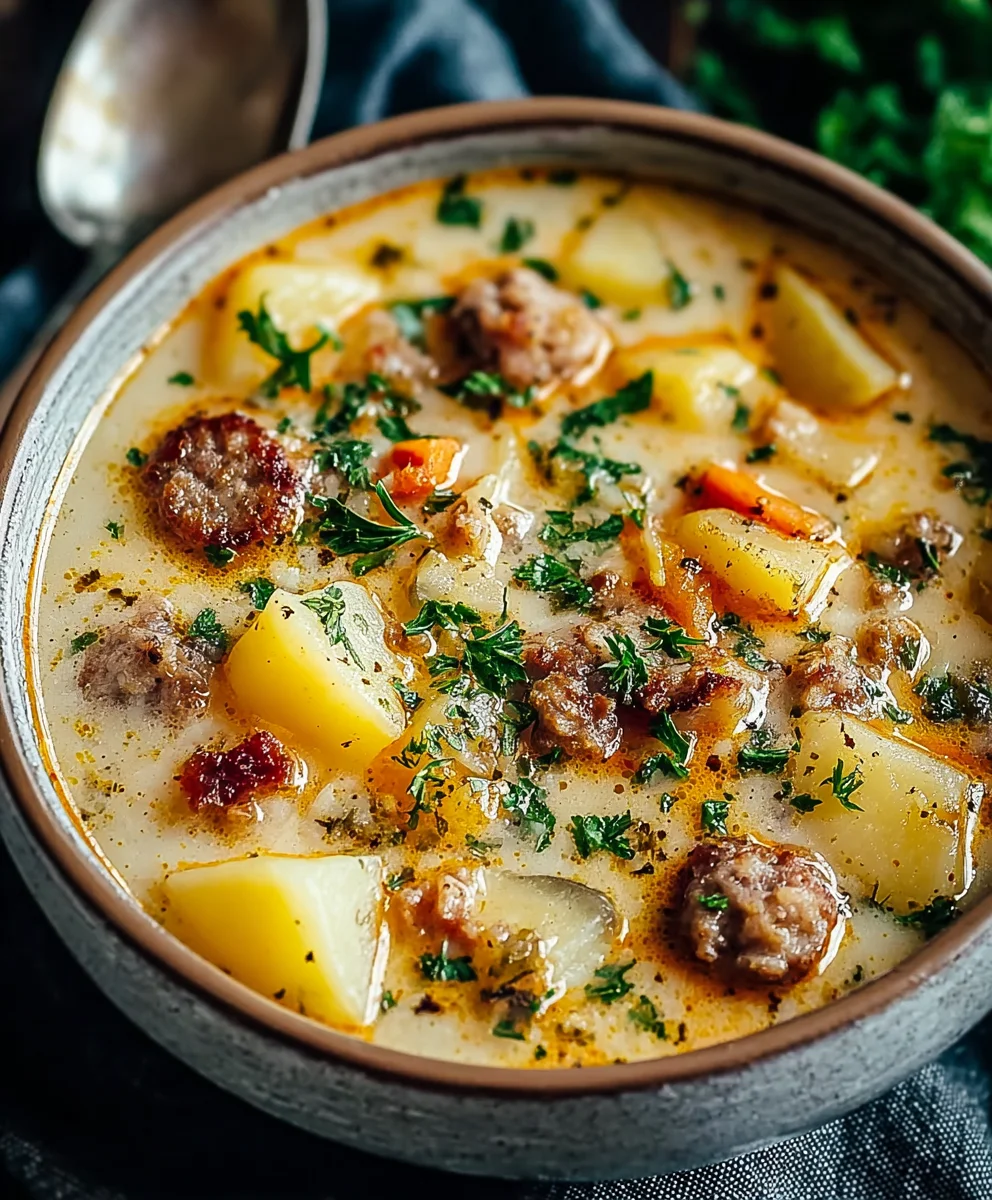
Potato and Sausage Chowder. Ah, the very name conjures images of cozy evenings, crackling fires, and the comforting embrace of a truly satisfying meal. There’s a reason why this hearty bowl has captured the hearts (and stomachs!) of so many. It’s the ultimate comfort food, a symphony of creamy textures and savory flavors that warms you from the inside out. What truly sets this Potato and Sausage Chowder apart is its delightful balance. The humble potato, cooked to tender perfection, provides a creamy, starchy base that’s both filling and subtly sweet. Then comes the star: the sausage. Whether you opt for a smoky kielbasa, a spicy Italian, or a mild breakfast sausage, it infuses the chowder with a rich, savory depth that’s utterly irresistible. We’ll explore how a few simple additions can elevate this classic into something truly extraordinary, making every spoonful a moment of pure culinary bliss.

Ingredients:
- 1 tablespoon olive oil
- 400 grams sausages (about 6 medium sausages, any flavour you prefer will work wonderfully)
- 1 medium onion, finely chopped
- 2 stalks celery, thinly sliced
- 2 medium carrots, thinly sliced
- 2 cloves garlic, minced
- 1/2 teaspoon dried thyme
- 3 tablespoons all-purpose flour
- 1 litre (approximately 4 cups) chicken or vegetable stock
- 2 bay leaves
- 100 grams (about 1/2 cup) wild rice
- 3 medium potatoes, peeled and cut into bite-sized chunks
- 375 millilitres (approximately 1 1/2 cups) single cream or half and half (for a richer, creamier chowder)
- Salt, to taste
Preparing the Foundation
- Begin extract by heating the olive oil in a large, heavy-bottomed pot or Dutch oven over medium heat. Once the oil is shimmering, add your sausages. If you’re using sausages with casings, you can either prick them a few times with a fork to allow fat to render, or remove the casings and crum extractble the sausage meat directly into the pot. Cook the sausages, breaking them up with a spoon as they brown, until they are nicely coloured and cooked through. This usually takes about 8-10 minutes. Once cooked, remove the sausages from the pot with a slotted spoon and set them aside on a plate, leaving any rendered fat in the pot. This rendered fat will add a fantastic depth of flavour to our chowder.
- To the same pot with the reserved sausage fat, add the chopped onion, sliced celery, and sliced carrots. Sauté these vegetables over medium heat, stirring occasionally, untilgin extractey begin to soften and the onion becomes translucent. This process of sweating the vegetables will release their natural sweetness and aromatics, forming the flavour base for our chowder. This usually takes about 5-7 minutes. Now, stir in the minced garlic and dried thyme. Cook for another minute until the garlic is fragrant, being careful not to burn it.
- Sprinkle the all-purpose flour over the sautéed vegetables. Stir continuously for about 1-2 minutes, allowing the flour to toast slightly. This step is crucial for creating a roux, which will thicken our chowder and give it a wonderfully smooth texture. The flour will absorb some of the fat in the pot, forming a paste.
Building the Chowder
- Gradually whisk in the chicken or vegetable stock, a little at a time, ensuring that you dissolve the flour paste into the liquid completely. This will prevent any lumps from forming. Once all the stock has been added and the mixture is smooth, add the bay leaves. Bring the mixture to a gentle simmer, scraping up any browned bits from the bottom of the pot – these are packed with flavour!
- Add the wild rice and the potato chunks to the pot. Stir everything well to ensure the rice and potatoes are submerged in the liquid. Bring the chowder back to a simmer, then reduce the heat to low, cover the pot, and let it cook. You want to simmer it gently until the wild rice is tender and the potatoes are easily pierced with a fork. This will typically take about 25-30 minutes for the rice and potatoes to cook through. Stir occasionally to prevent sticking.
- Once the rice and potatoes are tender, remove and discard the bay leaves. Return the cooked sausage pieces to the pot. Stir in the single cream or half and half. Gently heat the chowder through over low heat; do not boil it once the cream has been added, as this can cause it to curdle. Taste the chowder and season generously with salt as needed. The amount of salt will depend on the saltiness of your stock and sausages. Continue to cook for another 2-3 minutes until everything is heated through and the chowder has reached your desired consistency. If you prefer a thicker chowder, you can let it simmer uncovered for a few extra minutes, or you can mash a few potato chunks against the side of the pot to help thicken it.
Conclusion:
There you have it! A hearty and comforting bowl of Potato and Sausage Chowder, perfect for a chilly evening or a satisfying lunch. We’ve walked through each step to create a chowder that’s both incredibly flavorful and wonderfully easy to prepare, even for begin extractner cooks. The creamy base, savory sausage, and tender potatoes combine to create a truly memorable dish.
For serving suggestions, this Potato and Sausage Chowder is fantastic on its own, but it truly shines when paired with a crusty bread for dipping. A simple side salad with a light vinaigrette also offers a refreshing contrast to the richness of the chowder.
Don’t be afraid to experiment with variations! You can swap out the sausage for beef bacon or smoked beef ham, add in other vegetables like corn or peas for extra color and texture, or even a pinch of cayenne pepper for a subtle kick. Get creative and make this recipe your own!
We hope you enjoy making and devouring this delightful Potato and Sausage Chowder as much as we do. Happy cooking!
Frequently Asked Questions:
Can I make this chowder ahead of time?
Yes, absolutely! The flavors of the Potato and Sausage Chowder often meld and deepen overnight. Store it in an airtight container in the refrigerator for up to 3-4 days. Reheat gently on the stovetop, adding a splash of milk or broth if it has become too thick.
What kind of potatoes are best for this chowder?
Yukon Gold or red potatoes are ideal for this Potato and Sausage Chowder. Their waxy texture holds their shape well during cooking and they offer a lovely creamy consistency without becoming mushy. Russets can be used, but you’ll want to be careful not to overcook them to avoid them breaking down too much.

Hearty Beef Sausage Potato Chowder-Comfort Food
A comforting and hearty chowder featuring beef sausage, tender potatoes, and wild rice, perfect for a cozy meal.
Ingredients
-
1 tablespoon olive oil
-
400 grams beef sausages, any flavour
-
1 medium onion, finely chopped
-
2 stalks celery, thinly sliced
-
2 medium carrots, thinly sliced
-
2 cloves garlic, minced
-
1/2 teaspoon dried thyme
-
3 tablespoons all-purpose flour
-
1 litre chicken or vegetable stock
-
2 bay leaves
-
100 grams wild rice
-
3 medium potatoes, peeled and cut into bite-sized chunks
-
375 millilitres single cream or half and half
-
Salt, to taste
Instructions
-
Step 1
Heat olive oil in a large pot over medium heat. Add beef sausages, pricking them or removing casings and crumbling the meat. Cook, breaking them up, until browned and cooked through (8-10 minutes). Remove sausages, leaving fat in the pot. -
Step 2
Add chopped onion, sliced celery, and sliced carrots to the pot. Sauté until softened and onion is translucent (5-7 minutes). Stir in minced garlic and dried thyme; cook for 1 minute until fragrant. -
Step 3
Sprinkle flour over the vegetables and stir continuously for 1-2 minutes to toast, forming a roux. -
Step 4
Gradually whisk in stock, a little at a time, until smooth. Add bay leaves and bring to a simmer, scraping up browned bits. -
Step 5
Add wild rice and potato chunks. Stir, bring back to a simmer, then reduce heat, cover, and cook until rice is tender and potatoes are easily pierced (about 25-30 minutes). -
Step 6
Remove and discard bay leaves. Return cooked sausage to the pot. Stir in cream and gently heat through over low heat without boiling. Season with salt to taste. Cook for another 2-3 minutes until heated through and desired consistency is reached.
Important Information
Nutrition Facts (Per Serving)
It is important to consider this information as approximate and not to use it as definitive health advice.
Allergy Information
Please check ingredients for potential allergens and consult a health professional if in doubt.

Leave a Comment