

Chimichurri Sauce is more than just a condiment; it’s a vibrant explosion of herbaceous freshness that elevates everything it touches. Have you ever wondered what that bright, zesty, and incredibly flavorful green sauce is that accompanies grilled meats in South America? That, my friends, is the magic of chimichurri sauce. Its popularity isn’t hard to understand – it’s the perfect antidote to richness, offering a delightful tang that cuts through fattiness and awakens the palate. What truly sets this Argentinian staple apart is its simple yet brilliant combination of fresh herbs, garlic, vinegar, and oil. It’s not cooked, allowing the raw, bright flavors to shine through, creating a lively counterpoint to smoky grilled steaks, roasted vegetables, or even as a marinade. Get ready to discover how easily you can whip up this quintessential sauce in your own kitchen and unlock a new level of flavor for your meals.

Ingredients:
- 1/3 cup extra-virgin extract olive oil
- 2 tbsp white grape juice vinegar
- 1 garlic clove, minced
- 1/2 tsp sea salt
- 1/4 tsp dried oregano
- 1/4 tsp red pepper flakes
- 1/4 tsp smoked paprika
- 1/2 cup finely chopped fresh parsley
Making Your Vibrant Chimichurri Sauce
This Chimichurri Sauce is incredibly simple to whip up, requiring no cooking at all, making it a perfect condiment for a quick meal or a flavorful addition to any dish. Its bright, herbaceous flavor profile comes from fresh parsley and a hint of garlic, balanced by the tang of vinegar and the subtle warmth of spices. It’s a versatile sauce that can elevate grilled meats, roasted vegetables, or even serve as a dressing for salads.
Step 1: Preparing the BaseStep 2: Combining the Dry Elements
Once your fresh ingredients are prepped, it’s time to bring together the foundational flavors of the Chimichurri Sauce. In a medium-sized bowl, combine the 1/2 teaspoon of sea salt, 1/4 teaspoon of dried oregano, 1/4 teaspoon of red pepper flakes, and 1/4 teaspoon of smoked paprika. The sea salt will help to draw out the flavors of the herbs and spices, while the oregano provides an earthy base. The red pepper flakes offer a gentle kick of heat that can be adjusted to your preference – if you enjoy more spice, feel free to add a tiny pinch more. The smoked paprika lends a lovely, subtle smoky depth that complements the fresh parsley beautifully. Whisk these dry ingredients together briefly to ensure they are evenly distributed.
Step 3: Adding the Wet Ingredients and Aromatics
Now, we introduce the liquid components and the prepared aromatics to our spice blend. To the bowl containing the dry ingredients, add your 1/3 gin extract of extra-virgin olive oil. High-quality olive oil is important here, as its fruity notes will shine through. Following that, pour in the 2 tablespowhite grape juicete White grape juicear. White grape juice vinegar provides a bright, clean acidity that cuts through the richness of the oil and perfectly balances the herbaceousness of the parsley. Finally, add the minced garlic clove to the mixture.
Step 4: Emulsifying and Marrying the Flavors
This is where the magic happens and your Chimichurri Sauce truly comes together. Using a whisk or a fork, vigorously stir the ingredients in the bowl. You want to emulsify the olive oil and vinegar, creating a cohesive sauce rather than having them separate. Continue whiskgin extract until the mixture begins to thicken slightly and the oil and vinegar are well combined. This process also helps to distribute the minced garlic and the spices throughout the liquid base. Don’t rush this step; a good whisking will ensure a more stable and flavorful sauce.
Step 5: Incorporating the Fresh Parsley and Resting
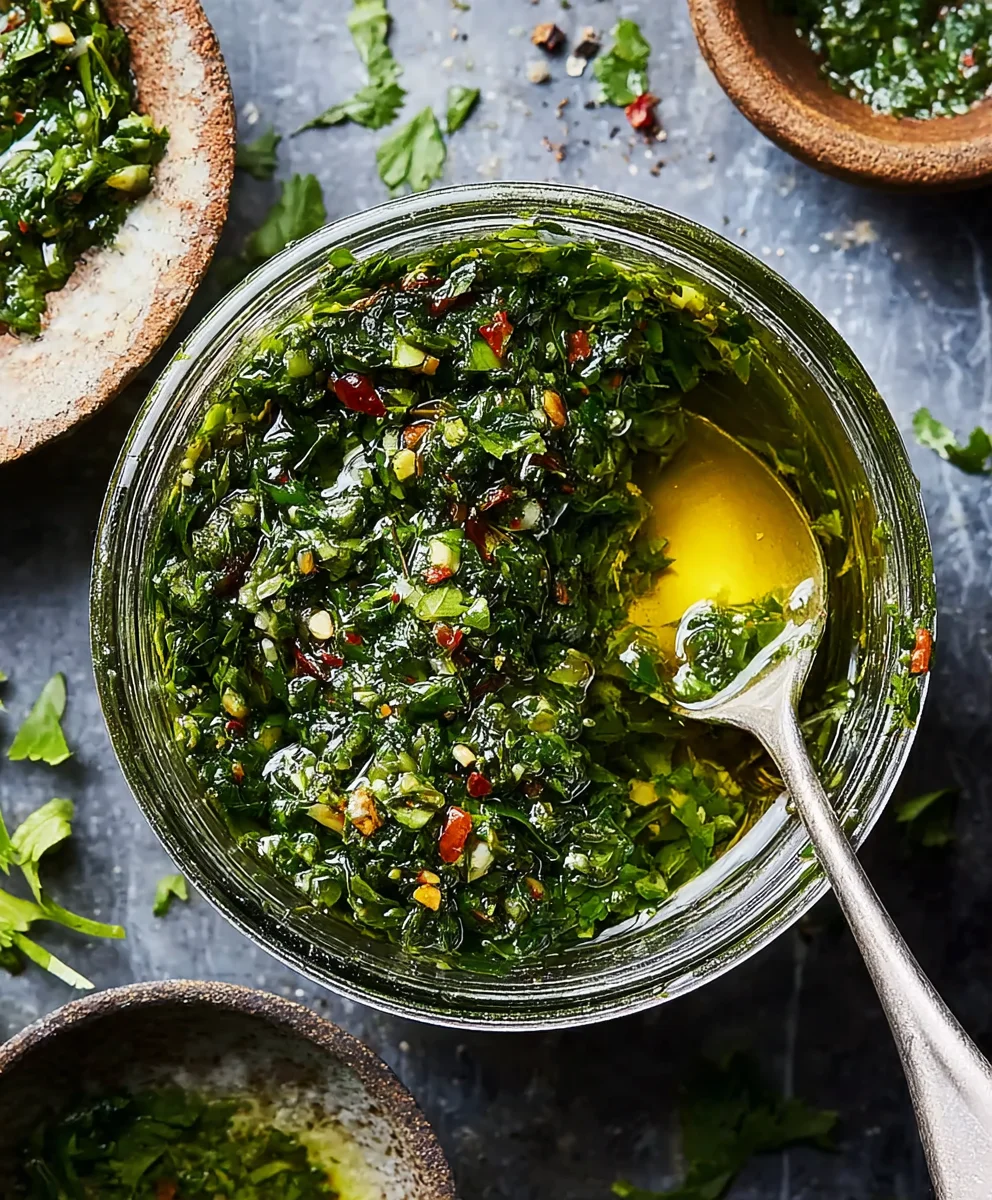
The final step in creating this phenomenal Chimichurri Sauce is to introduce the star of the show: the finely chopped fresh parsley. Add the 1/2 cup of chopped parsley to the bowl. Stir it in gently but thoroughly, ensuring that every bit of parsley is coated with the oil, vinegar, and spice mixture. Once the parsley is incorporated, cover the bowl and let the Chimichurri Sauce rest in the refrigerator for at least 15-30 minutes. This resting period is crucial as it allows the flavors to meld and deepen. The herbs will soften slightly, and the spices will infuse the oil and vinegar, resulting in a more complex and harmonious taste. For an even more intense flavor, you can let it rest for a few hours or even overnight. Before serving, give it another quick stir, as some separation might occur. Taste and adjust seasoning if necessary, perhaps adding a touch more salt or a splash more vinegar to suit your palate.
Conclusion:
And there you have it! Your very own, vibrant, and incredibly versatile Chimichurri Sauce is ready to elevate your culinary creations. We’ve covered the simple steps to create this Argentinian classic, bursting with fresh herbs, garlic, and a tangy kick. Remember, the beauty of this sauce lies in its adaptability. Don’t be afraid to experiment with the herb ratios to find your perfect balance!
For serving suggestions, this Chimichurri Sauce is a dream come true for grilled meats, especially steak, chicken, and fish. It’s also fantastic drizzled over roasted vegetables, potatoes, or even spread on sandwiches. If you’re feeling adventurous, try incorporating it into marinades or using it as a flavorful salad dressing base. The possibilities are truly endless.
As for variations, feel free to add a pinch of red pepper flakes for a touch of heat, or a squeeze of lime juice for an extra citrusy brightness. Some people even enjoy adding a bit of smoked paprika for a deeper flavor profile. The core ingredients – parsley, oregano, garlic, olive oil, and vinegar – are your foundation, so build upon them to make it your own!
We hope you enjoy making and sharing this delicious Chimichurri Sauce. It’s a simple yet impactful recipe that will quickly become a staple in your kitchen. Happy cooking!
Frequently Asked Questions:
Q: How long does Chimichurri Sauce last?
A: Properly stored in an airtight container in the refrigerator, your homemade Chimichurri Sauce should last for about 5-7 days. The fresh herbs will eventually start to lose their vibrancy, but it remains safe to consume for a while.
Q: Can I make Chimichurri Sauce ahead of time?
A: Absolutely! In fact, making it a few hours or even a day in advance can allow the flavors to meld together beautifully, making your Chimichurri Sauce even more delicious.
Q: What kind of vinegar is best for Chimichurri Sauce?
A: Red grape juice vinegar is traditionally used and provides a classic tang. However, you can also experiment with white grape juice vinegar or even apple cider vinegar for slightly different flavor notes in your Chimichurri Sauce.
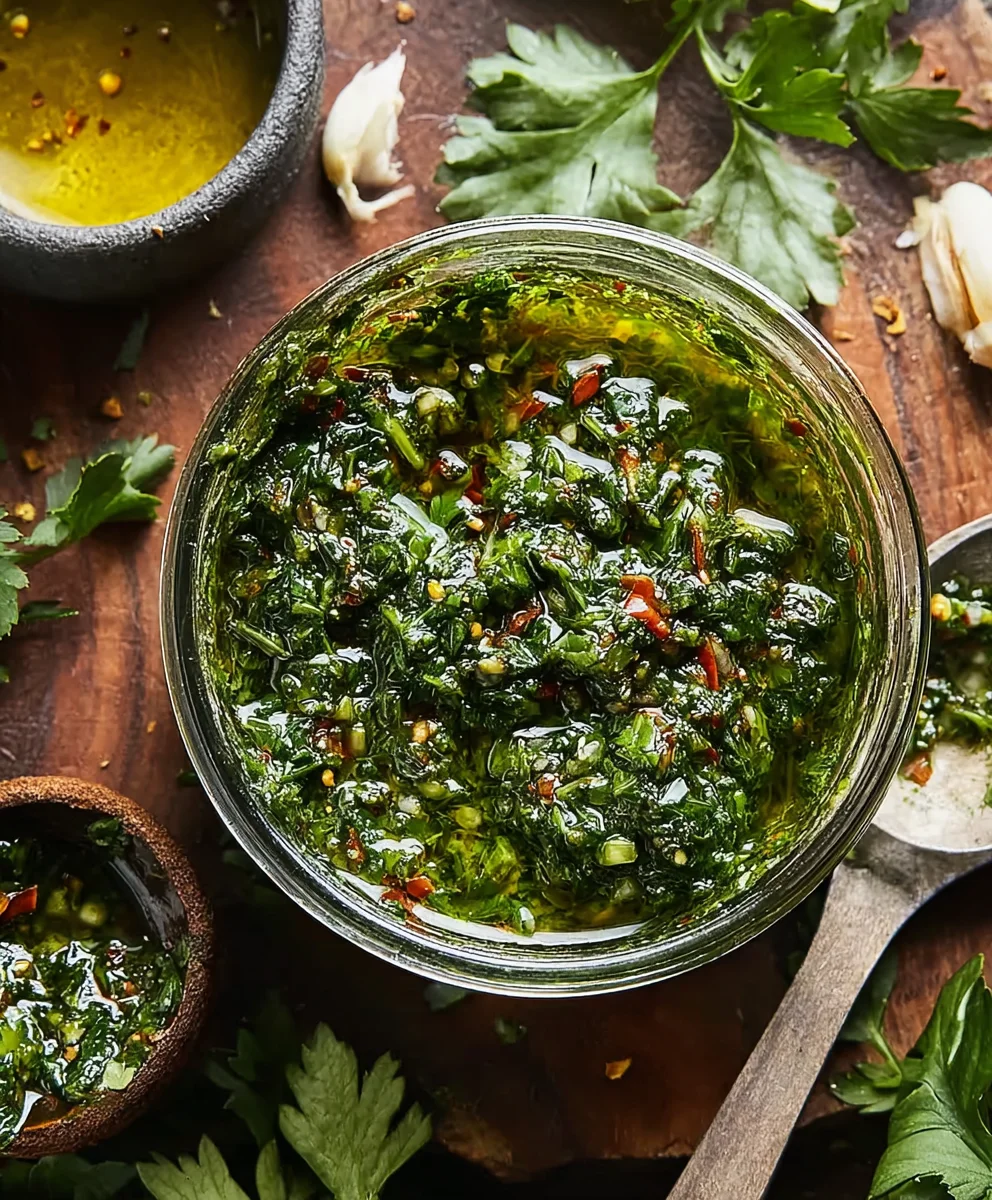
Best Chimichurri Sauce Recipe- Fresh Herb Flavor
A vibrant and easy-to-make chimichurri sauce bursting with fresh herb flavor, perfect for grilled meats, roasted vegetables, or as a salad dressing.
Ingredients
-
1/3 cup extra-virgin olive oil
-
2 tbsp white grape juice vinegar
-
1 garlic clove, minced
-
1/2 tsp sea salt
-
1/4 tsp dried oregano
-
1/4 tsp red pepper flakes
-
1/4 tsp smoked paprika
-
1/2 cup finely chopped fresh parsley
Instructions
-
Step 1
Finely chop the fresh parsley and mince the garlic clove. Ensure the parsley is very finely chopped for even distribution. -
Step 2
In a medium bowl, combine the sea salt, dried oregano, red pepper flakes, and smoked paprika. Whisk briefly to distribute. -
Step 3
Add the extra-virgin olive oil, white grape juice vinegar, and minced garlic to the bowl with the dry ingredients. -
Step 4
Vigorously whisk the ingredients together until emulsified and slightly thickened, ensuring the oil and vinegar are well combined and the garlic is distributed. -
Step 5
Gently stir in the finely chopped fresh parsley. Cover the bowl and refrigerate for at least 15-30 minutes to allow flavors to meld. Stir again before serving and adjust seasoning if necessary.
Important Information
Nutrition Facts (Per Serving)
It is important to consider this information as approximate and not to use it as definitive health advice.
Allergy Information
Please check ingredients for potential allergens and consult a health professional if in doubt.



Leave a Comment